A roof replacement can be one of the larger property projects an owner plans, so the decision deserves more than a quick look at age alone. Our complete guide to roof replacement explains how condition, recurring problems, roof design, materials, cost drivers, and future maintenance fit together before work begins.
For owners considering roof replacement in Atlanta, the most useful first step is to understand what the existing roof is telling you. A structured assessment can show whether targeted repairs remain practical or whether a broader replacement plan is the better use of the budget.
How can you tell whether you need roof repair or full replacement in Atlanta?
Repair usually makes sense when damage is limited, the roof assembly is otherwise serviceable, and the same problems are not returning across large areas. Replacement becomes more likely when deterioration is widespread, leaks recur in several locations, moisture has affected underlying components, or repairs are no longer producing reliable results.
Age can provide context, but it should not determine the project by itself. GAF notes that commercial roof service life varies with material, climate, installation quality, drainage, maintenance, and moisture exposure in its commercial roof lifespan guidance. A younger roof with poor drainage or trapped moisture may need major work before an older roof that has been maintained consistently.
A professional roof inspection service in Atlanta can help document the condition of membranes or panels, seams, flashings, penetrations, drainage areas, insulation where accessible, and signs of water entry. The goal is not to label every defect as a replacement trigger. It is to identify whether problems are local, repeating, or affecting the wider roof assembly.
Useful replacement warning signs include recurring leaks in separate areas, extensive membrane splitting or surface deterioration, widespread corrosion on a metal system, saturated insulation, deteriorated decking, and repair histories that keep growing. Owners should compare the likely cost and expected life of another repair with the value of resetting the roof system through replacement.
- Recurring leaks in multiple areas
- Widespread membrane, panel, or flashing deterioration
- Moisture damage below the visible roof surface
- Repair costs that continue to rise without solving the underlying issue
How much does roof replacement cost in Atlanta, GA?
There is no single roof replacement price in Atlanta because size, material, tear-off requirements, access, insulation, decking condition, permits, disposal, and roof complexity can change the total significantly. Residential market data can provide a reference point, but commercial low-slope projects should be estimated from the actual building and roof assembly.
Current 2026 Atlanta roof replacement cost data from Angi places residential replacement at an average of about $7,777, with many homeowner projects reported between $5,211 and $10,355. Those figures are third-party residential estimates, not Absolute Roofing Services pricing, and they should not be applied directly to a commercial roof.
Commercial roofs may involve much larger areas, insulation changes, tapered drainage, rooftop equipment, multiple penetrations, staging requirements, tear-off logistics, and different membrane or metal systems. Even two buildings with the same square footage can produce different project totals if one has wet insulation, difficult access, or extensive flashing work.
The better budgeting method is to request an inspection and a written scope that separates known work from possible concealed conditions. Owners can then compare material, removal, preparation, installation, detailing, disposal, and follow-up requirements instead of relying on one broad square-foot figure.
What happens during a professional roof replacement?
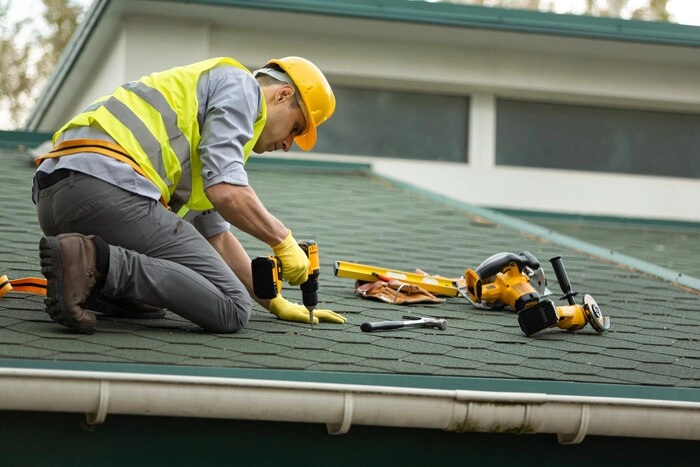
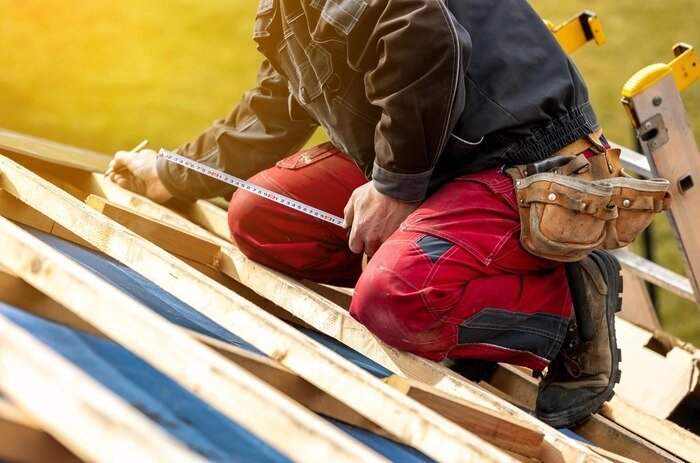
A professional roof replacement typically moves through assessment, scope development, site preparation, removal or recovery decisions, substrate work, installation, detailing, and final checks. The exact sequence depends on the roof system and building, but each stage should protect the structure from avoidable exposure and give the owner a clear record of what is being installed.
Planning begins with the existing assembly. The contractor needs to understand roof type, slope, drainage, deck condition, insulation, penetrations, access, and any areas already affected by moisture. From there, the scope can define whether the old system must be removed, whether portions can remain, and what preparation is required before new materials are placed.
During construction, crews coordinate tear-off or preparation with the installation sequence so the building stays protected. Flashings, edges, drains, curbs, pipes, walls, and other transitions deserve particular attention because these details connect the field of the roof to the rest of the building.
Which roofing material is right for the property?
The right material depends on the roof slope, deck, drainage, building use, traffic, energy goals, expected ownership period, maintenance capacity, and budget. TPO, EPDM, built-up roofing, metal, PVC, modified bitumen, and suitable coating or recover options each have strengths, but none is automatically the best answer for every property.
Single-ply membranes such as TPO and EPDM are common on low-slope commercial buildings. Built-up roofing uses multiple asphaltic layers, while modified bitumen combines asphalt-based materials with reinforcement. Metal can serve steep-slope and commercial applications, and PVC is another single-ply option used on low-slope roofs.
How should Atlanta property owners prepare for a replacement project?
Preparation should cover the roof and the building below it. Confirm the scope, work areas, access, staging, tenant or employee communication, weather plans, protection of sensitive operations, payment schedule, documentation, and the process for approving changes if concealed conditions are discovered after work starts.
Weather deserves a place in that plan. The National Weather Service reports that damaging thunderstorm winds, large hail, and tornadoes occur across North and Central Georgia, with severe weather possible throughout the year. Reviewing the regional severe storm climatology helps explain why scheduling, temporary protection, drainage, and post-storm checks matter during a major roofing project.
Inside the building, owners should identify areas that cannot tolerate dust, vibration, noise, odors, or temporary access restrictions. Rooftop HVAC equipment, antennas, solar equipment, exhausts, and other penetrations should also be accounted for before crews arrive so roofing details can be coordinated rather than improvised.
A useful preconstruction meeting can confirm daily access, parking or staging areas, safety boundaries, communication contacts, material storage, cleanup expectations, and how unexpected deck or moisture conditions will be documented. Clear decisions before work starts reduce confusion once the roof is open and crews are moving through the installation sequence.
What is the next step if roof replacement appears necessary?
If inspection findings point toward replacement, the next step is to turn those findings into a written project scope and compare suitable systems on the same basis. Look beyond the initial price and consider preparation, detailing, expected maintenance, building disruption, and how the proposed system fits the property over the years ahead.
At Absolute Roofing Services, we are a family-owned and operated commercial roofing contractor serving Metro Atlanta. We work across repair, replacement, maintenance, commercial membranes, coatings, and metal systems, and our new roof installation options can help owners understand how a replacement moves from assessment into installation.
A well-scoped project also gives owners a stronger basis for comparing proposals from an Atlanta roofing company because material, preparation, detailing, and maintenance expectations can be reviewed side by side instead of reduced to one total price.
If you are planning a new roof installation in Atlanta, contact Absolute Roofing Services to discuss the condition of your property and the next practical step.