Selecting commercial roofing in Marietta requires more than comparing product names. TPO, EPDM, and built-up roofing differ in materials, seams, layers, repair methods, and installation, while each project has its own deck, drainage, insulation, and rooftop equipment conditions.
A professional roofing service in Marietta will assess those conditions before recommending a system. Absolute Roofing Services provides commercial roofing services across Metro Atlanta.
How does TPO roofing work on commercial buildings?
TPO is a thermoplastic single-ply roofing membrane commonly used on low-slope commercial buildings. Sheets are joined with heat-welded seams, and many TPO membranes use light-colored surfaces. Performance depends on membrane selection, attachment, seam quality, flashing, drainage, maintenance, and the full roof assembly.
GAF has published field studies of aged TPO roofs. TPO field-performance research adds technical background, but owners should still evaluate the proposed membrane, installation, warranty requirements, and building conditions.
When might EPDM be considered instead?
EPDM is a synthetic rubber single-ply membrane with a long history in commercial roofing. It may be considered where its material properties, installation method, detailing approach, and compatibility with the building make sense. The decision should compare the entire assembly rather than choosing solely by membrane color or initial price.
TPO and EPDM maintenance should address seams, flashing, penetrations, drainage, traffic damage, and previous repairs. Repair products and procedures differ, so methods must be compatible with the installed membrane.
How is built-up roofing different from single-ply membranes?
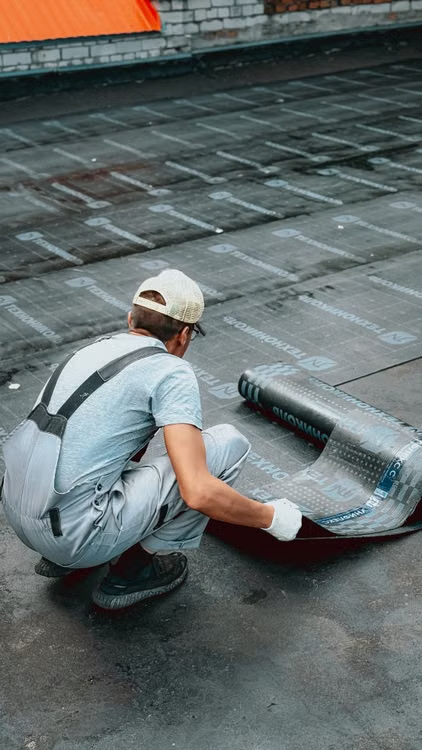
Built-up roofing uses multiple layers of bitumen and reinforcing materials to create a multi-ply assembly. TPO and EPDM rely on a single primary membrane layer. That structural difference affects weight, installation, surface protection, repair approach, and how owners should compare the systems for a particular building.
GAF notes that commercial roof lifespan depends on roof type along with climate, installation, drainage, maintenance, moisture, and other conditions. Commercial roof lifespan guidance helps explain why no system should be selected from a generic lifespan number alone.
| System | Roof layer | Planning focus |
| TPO | Thermoplastic membrane | Seams, drainage |
| EPDM | Rubber membrane | Detailing, maintenance |
| Built-up | Multi-ply bitumen | Weight, layers, repairs |
What factors should guide the final system choice?
Your final choice should take into consideration deck and insulation condition, slope, drainage, roof size, penetrations, rooftop equipment, foot traffic, installation disruption, maintenance capability, budget, energy priorities, and ownership plans. A contractor should explain how the proposed roof addresses those factors and what future maintenance will be required.
For owners planning roof maintenance in Marietta, the chosen system should also have a clear inspection and repair strategy. A roof that fits the building but receives little attention can still develop avoidable problems.
How can a Marietta business plan the next step?
Start with a documented roof assessment and compare proposals on system design, preparation, insulation, attachment, drainage, flashing, penetrations, maintenance, and project scope. The recommendation should make sense for the existing building and the owner operational priorities.
Absolute Roofing Services can evaluate repair needs and system options through its roof maintenance services. If inspection findings show isolated damage, roof repair in Marietta may be a better near-term solution than full replacement.
Where metal roofing in Marietta is also being considered, compare it with TPO, EPDM, and built-up systems based on the building. Contact Absolute Roofing Services to discuss the roof and available options.