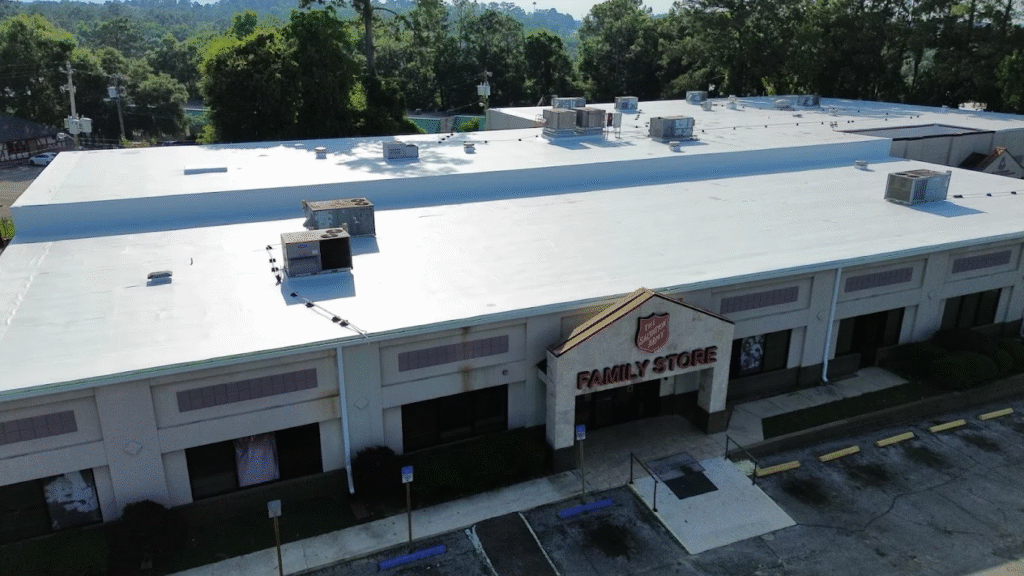
Maintaining a commercial facility in the modern era requires a departure from traditional, manual observation. As weather patterns become more volatile and labor costs rise, you need a way to monitor your building envelope that is both accurate and cost-effective. Implementing AI roof inspection technology is no longer a luxury; it is the most reliable method for protecting your long-term capital investment. Choosing a professional roofing contractor in Atalnata who utilizes these digital diagnostics ensures your property stays ahead of expensive structural failures.
What Is AI Roof Inspection Technology?
AI roof inspection technology uses high-resolution drone imagery and machine learning algorithms to detect structural defects like cracks, ponding water, and thermal anomalies. This system creates a high-definition digital map of the roof, allowing you to track minor issues with millimeter precision before they cause internal water damage.
Using drones for data collection removes the safety risks associated with having personnel walk a steep or damaged roof. Once the drone captures thousands of images, the AI software analyzes each pixel to find patterns that indicate a breach in the membrane. This process is much faster than a human inspection and eliminates the risk of human error or oversight. You receive a comprehensive report that categorizes every issue by severity, allowing you to prioritize your maintenance budget based on factual data.
How Do Real-Time Leak Sensors Protect Your Building?
Real-time leak sensors are small, wireless devices installed within the roofing assembly that detect moisture at the first sign of a breach. These sensors send an immediate alert to your building management system or smartphone, allowing you to address a small puncture before it saturates the insulation or ruins your inventory.
These sensors act as a 24/7 security system for your roof. In a traditional setup, you only know there is a problem when you see a drip in your warehouse or office. By that point, the water has already traveled through the deck and likely caused mold growth. Real-time sensors identify the exact location of the moisture intrusion immediately. This allows for a surgical repair that is significantly cheaper than replacing large sections of saturated roofing material.
- Immediate Alerts: Receive notifications the moment moisture is detected.
- Precise Localization: Know exactly where the leak is located without tearing up the roof.
- Data Logging: Track how your roof performs during different weather events over time.
- Asset Protection: Safeguard expensive machinery and sensitive electronics from unexpected water.
How Often Should You Schedule Roof Inspection In Atlanta?
You should schedule a roof inspection in Atlanta at least twice a year, typically in the spring and fall. Additionally, you must perform a targeted inspection after any major weather event, such as a severe thunderstorm or hailstorm, to check for impact damage and ensure that the drainage system is clear.
The Georgia climate puts extreme stress on commercial membranes. The intense UV radiation in the summer can bake the oils out of certain materials, while high humidity encourages biological growth. By inspecting in the spring, you prepare the roof for the heat. The fall inspection ensures the building is watertight before the winter rain cycles begin. If you use smart technology, these inspections become even more valuable because you can compare new data against your digital baseline.
| Inspection Type | Timing | Focus Areas |
| Spring Routine | March – April | UV degradation, sealant cracks, HVAC vibrations. |
| Fall Routine | October – November | Debris removal, drainage flow, seam integrity. |
| Emergency | Post-Storm | Hail impacts, wind uplift, clogged scuppers. |
| Smart Audit | Annual | AI data comparison and sensor calibration. |
Why Is Predictive Maintenance Better Than Reactive Repair?
Predictive maintenance uses data from sensors and AI drones to fix problems while they are still minor, whereas reactive repair only happens after a failure occurs. This proactive approach extends the lifespan of your roof by up to 10 years and prevents the massive costs associated with emergency service calls and interior restoration.
When you react to a leak, you are in a position of weakness. You have to pay premium rates for emergency labor, and you may face business downtime. Predictive maintenance allows you to schedule repairs during normal business hours on your own terms. It also prevents the “domino effect” of roofing failure, where a small leak leads to wet insulation, which then leads to deck rot and eventual structural instability.
- Cost Control: Smaller, planned repairs are easier to budget than large-scale replacements.
- Longevity: Keeping the insulation dry ensures the entire system lasts its full intended lifespan.
- Documentation: You have a clear record of maintenance for insurance and warranty purposes.
- Safety: Reducing the number of emergency repairs limits the risk of accidents on your property.
How Does Thermal Imaging Find Hidden Moisture?
Thermal imaging, or infrared thermography, finds hidden moisture by measuring the temperature differences on the roof surface after the sun goes down. Wet insulation holds heat longer than dry insulation; therefore, an infrared camera can “see” the warm, wet spots beneath the membrane that are invisible to the naked eye.
This technology is a game-changer for facility managers. If you are considering a roof replacement in Atlanta, a thermal scan can tell you if you only need a partial repair instead. If the scan shows that 90% of your insulation is dry, you can save thousands of dollars by only replacing the affected areas. This data-driven approach ensures that you aren’t paying to replace materials that are still in good condition.
- Non-Destructive: No need to cut “core samples” to check for moisture.
- Comprehensive: Scans the entire roof surface in a single pass.
- Accurate: Provides a clear visual map of where repairs are needed.
How Is Data Integrated Into Building Management Systems?
Data integration occurs when your roof sensors and drone reports are linked directly to your Building Management System (BMS) or Computerized Maintenance Management System (CMMS). This connection allows the roof to “talk” to the rest of the building, providing a unified view of your facility’s health and automating the maintenance workflow.
By centralizing this information, you remove the silos that often lead to communication breakdowns between facility staff and contractors. When a sensor triggers an alert, the BMS can automatically generate a work order and notify your roofing partner. This ensures that response times are measured in minutes rather than days. Furthermore, the historical data stored in your BMS allows you to analyze long-term performance trends, which is essential for accurate capital expenditure planning over the next five to ten years.
- Automated Workflow: Sensors trigger immediate service requests based on moisture thresholds.
- Unified Dashboard: View roof health alongside HVAC and electrical performance data.
- Historical Auditing: Keep a permanent record of all alerts and subsequent repair actions.
- Vendor Accountability: Track how quickly and effectively repairs are completed following an alert.
What Is The Lifecycle Cost Impact Of Smart Technology?
The lifecycle cost impact of smart technology refers to the total savings achieved over the entire duration of the roof’s life compared to a traditional system. While the initial investment in sensors and AI audits is higher, the reduction in emergency repairs, interior damage, and premature replacement results in a significantly lower Total Cost of Ownership (TCO).
Research into commercial property management shows that roofs maintained with predictive technology experience 40% fewer catastrophic failures. By extending the life of your membrane by just five years, you defer the massive cost of a full replacement, which can reach hundreds of thousands of dollars for large warehouses. When you factor in the energy savings from maintaining dry insulation and the reduced administrative burden of managing repairs, the return on investment for smart technology becomes clear within the first three years of operation.
| Cost Component | Traditional Roof | Smart Roof |
| Initial Install | Lower | Moderate (Sensor inclusion) |
| Emergency Repairs | Frequent/Expensive | Rare/Localized |
| Insulation Replacement | High (Due to undetected leaks) | Minimal (Early detection) |
| Expected Lifespan | 15–20 Years | 25–30 Years |
What Are The Benefits Of Creating A Digital Twin Of Your Roof?
A digital twin is a 3D virtual model of your roof created from drone data. This model allows you to simulate how the roof will handle water flow, track the aging of specific components over years, and provide contractors with exact measurements for highly accurate repair estimates.
Having a digital twin means you no longer have to rely on old blueprints that may not reflect the current state of your building. You can use the model to plan for future projects, such as installing solar panels or new HVAC units, without needing to go up on the roof to take manual measurements. It also serves as an undeniable record for insurance claims if your building is ever hit by a major storm.
- Measurement Accuracy: Get exact dimensions for every seam, flashing, and penetration.
- Historical Tracking: Compare the roof’s condition year-over-year to see how it is aging.
- Project Planning: Use the 3D model to coordinate with other trades and contractors.
- Warranty Support: Prove that you have maintained the roof according to manufacturer standards.
How Do Smart Roofs Impact Insurance And Compliance?
Smart roofs impact insurance by providing objective data that proves the roof is being managed professionally, which can lead to lower premiums. Additionally, these systems help you stay in compliance with the 2026 building codes by documenting that your roof meets specific solar reflectance and thermal performance standards.
When you invest in a professional installation, understanding your coverage is vital for long-term planning. Absolute roofing offers material and workmanship warranties depending on the roofing system and manufacturer, ensuring that your investment is protected against both product defects and installation errors. Having a digital record of your roof’s health makes it much easier to process claims and keep your coverage intact for decades, as you can provide insurers with undeniable proof of proactive maintenance.
Secure Your Property Values With Data-Driven Care
Successfully managing a large-scale facility in today’s market requires more than just a ladder and a flashlight. Embracing AI roof inspection technology allows you to move away from guesswork and into a period of total clarity regarding your building’s health. By investing in roof maintenance in Atlanta that utilizes these modern tools, you ensure that your operations remain uninterrupted and your overhead stays low.
Absolute Roofing Services provides the advanced technical expertise you need to modernize your maintenance plan. We specialize in providing a comprehensive roof inspection service in Atlanta that combines decades of local experience with the latest in diagnostic equipment.
Contact us to find out more to secure your property for the future with a high-quality new roof installation.