Poor workmanship shows up slowly — a loose seam today, a small leak next month, a costly structural repair down the line. For commercial property owners and managers, recognizing the signs of poor roofing workmanship early can save thousands in emergency repairs and downtime. This guide by expert roofing contractors walks you through the telltale red flags, where to look, and what to document so you can act before damage spreads.
Common Signs Of Poor Roofing Workmanship
1. Irregular or open seams
Many roofing systems rely on sealants or adhesives for waterproofing. Improper application—too much, too little, or uneven spread—reduces effectiveness. Signs of poor roofing workmanship include:
- Cracked, bubbled, or peeling sealant
- Gaps where adhesive should bond membranes or flashing
- Excess adhesive running off seams or edges
These small defects can create significant leak paths over time, especially on commercial flat roofs exposed to standing water or heavy rainfall.
2. Inconsistent flashing and edge metal
Flashing around parapets, curbs, and penetrations is one of the most common failure points. Signs of bad flashing work include exposed fasteners, loose metal coping, gaps at transitions, and uneven flashing height. Poorly formed or improperly fastened edge metal will let wind and water pry membranes loose.
3. Visible membrane damage and shortcuts
Look for mismatched patches, overlapping layers that don’t line up, excessive use of temporary sealants, and adhesive smears. These are signs the crew rushed repairs or used shortcuts instead of following manufacturer installation guidelines.
4. Ponding and poor drainage after installation
If a recently worked-on flat roof shows new ponding, the crew may have altered the slope, blocked drains, or neglected to install tapered insulation. Proper drainage is a basic requirement; persistent standing water points to poor planning or execution.
5. Inconsistent or missing fasteners
Fasteners secure roofing materials and membranes. On metal roofing in Atlanta, panels must be properly fastened with screws or clips; on EPDM roofing in College Park and TPO roofing in Atlanta , mechanical fasteners must follow manufacturer specifications. Inconsistent spacing, missing fasteners, or over-tightening can compromise the roof’s integrity.
Visible gaps between panels, loose nails, or lifted roofing sections indicate poor workmanship. This can result in wind damage, leaks, and premature roof failure, especially in areas exposed to extreme weather.
6. Inadequate termination at penetrations
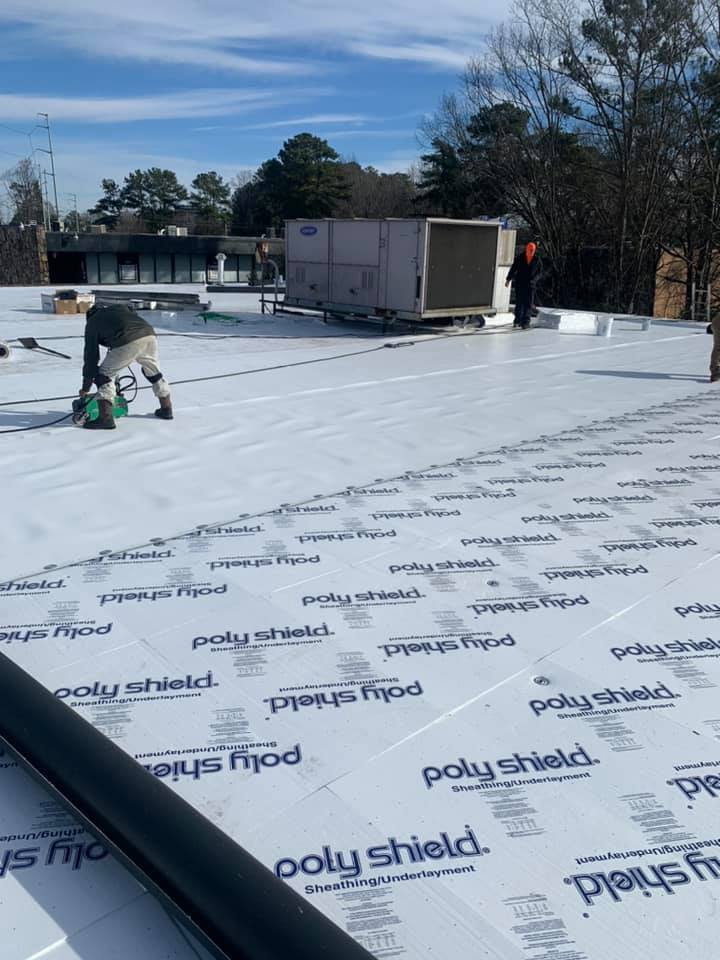
Penetrations — HVAC mounts, vents, skylights — must have custom flashing and secure terminations. If you see improvised flashing, loose boot seals, or sealant-only terminations, the workmanship is substandard.
7. Uneven surfaces and damaged substrate
A good installation begins with a sound deck. Noticeable bumps, ridges, or areas where the membrane doesn’t lie flat can indicate a damaged or unprepared substrate that was overlooked before installation.
8. Poor clean-up and leftover materials
A professional crew leaves a clean job site. Excess adhesive, loose scraps, and fasteners left on the roof are signs of haste and poor attention to detail — and they can cause punctures or clog drains.
9. No inspection documentation or photos
Professional roofing contractor in Atlanta provide documentation that includes installation details, manufacturer-approved methods, and warranties. A lack of paperwork, unclear warranties, or missing inspection reports can indicate rushed work or substandard practices. Without proper documentation, property owners may struggle to hold contractors accountable if problems arise.
10. Noncompliance with the manufacturer’s specifications
Using the wrong adhesive, wrong fastener pattern, or improper membrane overlap violates manufacturer guidelines and voids warranties. If the contractor can’t explain the materials and methods used, demand documentation.
How To Inspect Safely And Effectively
Start with a visual check from the ground or use binoculars. Never put yourself at risk climbing onto a commercial roof unless you’re trained or accompanied by professionals. For deeper inspections, request moisture scans, infrared imaging, or a certified roof inspector who can detect hidden delamination and trapped moisture.
What To Ask Your Contractor Or Property Manager
- Can you show installation photos and daily logs?
- Is the work performed according to the manufacturer’s guidelines (ask which)?
- Are materials and fasteners labeled and inventoried?
- Do you provide a workmanship warranty, and what does it cover?
Collect emails, photos, and timestamps — a clear paper trail makes it far easier to hold a contractor accountable if defects surface.
Call A Pro: Work with Absolute Roofing Services in Atlanta
Identifying the signs of poor roofing workmanship early can save commercial property owners time, money, and headaches. At Absolute Roofing Services, our expert team inspects commercial roofing in College Park thoroughly, detects early warning signs, and delivers professional repair or replacement services.
We work with TPO, EPDM, BUR, metal, and other roofing service in Atlanta, ensuring your building is protected against leaks, structural damage, and weather exposure.
Protect your commercial roof today.
Regular inspections, professional evaluations, and proactive maintenance are key to avoiding major issues.
Call now for a professional inspection, expert assessment, and reliable roofing solutions designed to extend your roof’s lifespan. You can also learn more about our FLIR Imaging service.