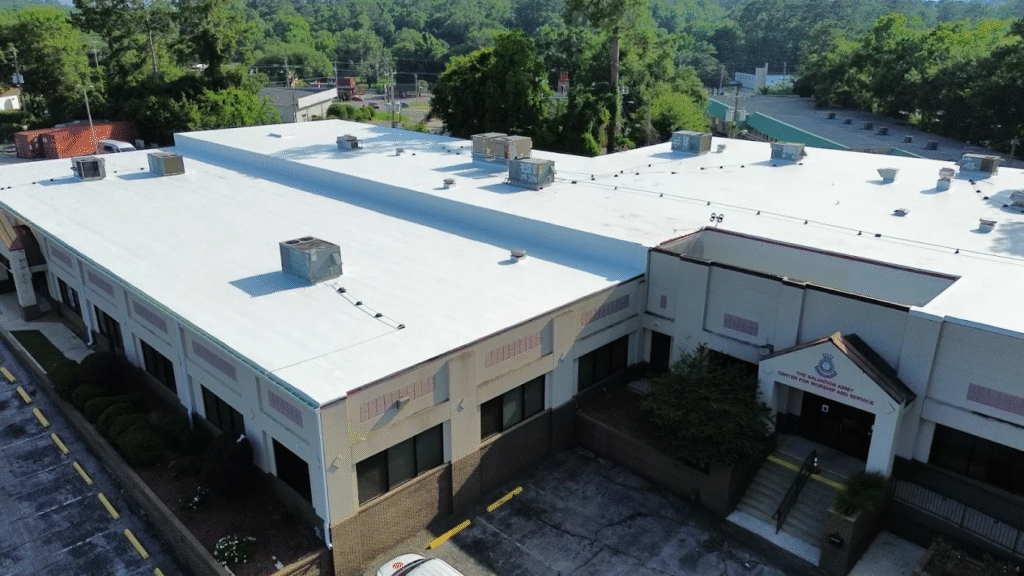
Flat roofs may look straightforward, but their performance hinges on the materials chosen. Materials determine how a roof handles ponding water, rooftop traffic, UV exposure, and mechanical loads. Choosing the right flat roof materials reduces maintenance, extends service life, and improves energy performance — all of which lower total lifecycle cost for commercial properties.
Common Flat Roof Materials and Their Strengths
TPO (Thermoplastic Polyolefin)
TPO is a white, single-ply membrane known for its reflectivity and seam-weldability. It resists punctures and chemical exposure and helps reduce cooling loads thanks to its reflective surface. TPO is often selected for its balance of cost, durability, and energy savings.
EPDM (Ethylene Propylene Diene Monomer)
EPDM is a rubber membrane valued for flexibility and weather resistance. It performs well across wide temperature ranges and is straightforward to patch, making it a practical choice where easy repairs are a priority.
PVC (Polyvinyl Chloride)
PVC provides strong chemical resistance and robust seam performance. It’s a go-to when oils, greases, or solvents are present on the roof. While typically higher in upfront cost, PVC can offer excellent long-term value in demanding environments.
Built-Up Roofing (BUR) and Modified Bitumen
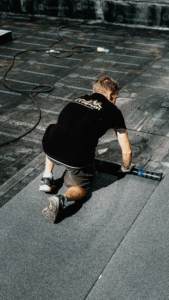
BUR systems consist of multiple layers of bitumen and fabric, providing proven waterproofing and impact resistance. Modern modified bitumen products combine traditional BUR toughness with polymer modifiers for better flexibility and UV resistance.
Coatings (Silicone, Elastomeric, Aluminum)
Coatings are applied over existing membranes to seal small defects, reflect solar energy, or protect metal surfaces. They’re not primary membranes but are powerful tools for extending service life when applied correctly.
How Material Choice Affects Lifespan and Maintenance
Different flat roof materials have distinct maintenance needs. Single-ply membranes like TPO and PVC benefit from routine seam checks and cleaning. EPDM is forgiving with simple patch repairs. BUR systems tolerate heavy contact but may need surfacing maintenance like gravel redistribution. Coatings require periodic reapplication to remain effective.
Selecting a reflective membrane or coating lowers rooftop temperatures, reducing thermal stress and slowing material degradation. Conversely, choosing a non-reflective membrane in hot climates increases thermal expansion cycles, accelerating wear and potentially increasing repair frequency.
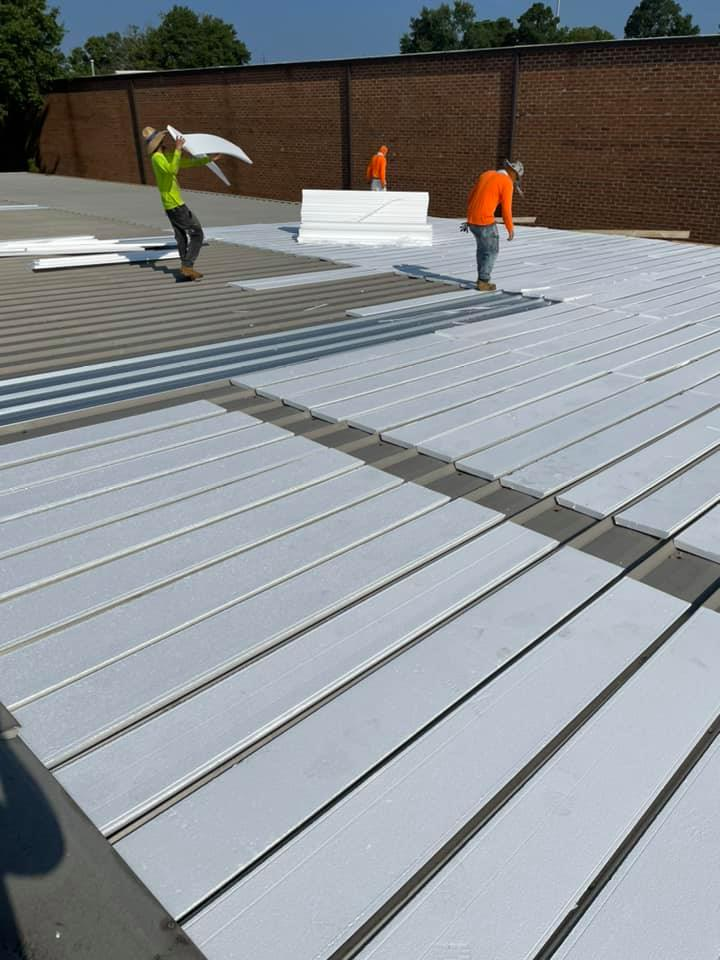
Performance vs. Cost: Evaluating Total Lifecycle Value
Upfront price doesn’t tell the whole story. Consider installation quality, warranty terms, expected maintenance, and energy savings to evaluate true lifecycle cost.
A slightly higher initial investment in a more durable membrane or reflective coating can reduce repairs, lower HVAC bills, and postpone replacement—resulting in better long-term value.
Compatibility with rooftop equipment, foot-traffic patterns, and drainage design should also guide material selection. A thorough assessment helps match the right material to building needs and usage.
Environmental and Code Considerations
Many modern roofing materials are recyclable or incorporate recycled content. Reflective membranes contribute to energy efficiency and can support sustainability goals or local building incentives. Always confirm local codes for fire ratings, insulation R-values, and stormwater rules before finalizing material choices.
Protect Your Roof Investment with Absolute Roofing Services
Selecting the right material is just the first step. Professional installation and maintenance are equally crucial. Absolute Roofing Services specializes in evaluating, installing, and maintaining flat roof systems using premium flat roof materials such as EPDM roofing in College Park, TPO, built up roofing in Atlanta, and advanced coatings.
Our team ensures proper material selection based on your building’s needs, climate, and long-term goals. Schedule a consultation and maximize the performance, efficiency, and longevity of your flat roof.